
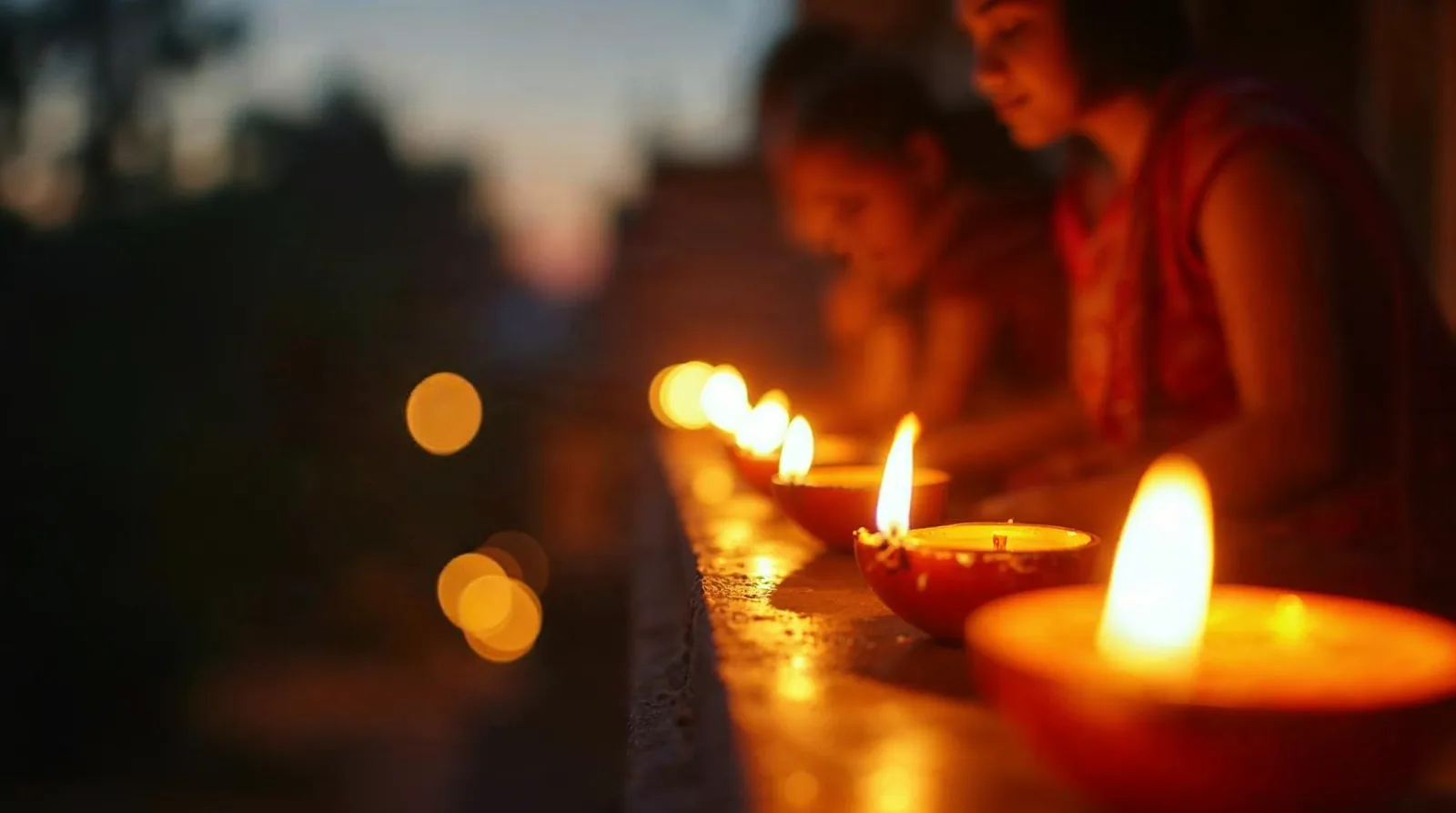
Every Diwali the question is the same: what is the puja muhurat? The rule is elegant - Lakshmi puja is performed during Pradosh Kaal (the ~2.5 hours after sunset) on Amavasya, ideally when a fixed (sthira) lagna is rising so prosperity "stays".
In 2026, that window varies by city - the lagna rising at sunset in Delhi is not the one rising in Chennai. Check the precise window for your city in our Panchang or get a personalized muhurat.
Why Lakshmi Puja has a muhurat at all
The festival's astrological core is Amavasya - the new moon night - when darkness is at maximum and the Lakshmi invocation is timed for pradosh kaal (the twilight window). The classical muhurat specifies a fixed lagna (usually Vrishabha or Simha - the stable, wealth-holding lagnas) for the puja, because worship done in a sthir lagna is believed to "fix" the invoked prosperity in the home. This is why pandits announce a precise evening window each year rather than "anytime after dark".
Dhanteras, Kali Chaudas and Chhoti Diwali
Dhanteras (Dhantrayodashi, two nights before) is the wealth-purchasing muhurat - buying metal and new items in its Trayodashi window is the tradition, and it is considered the year's best day for first-time gold purchase. Kali Chaudas (Chaturdashi) is the night for protection rituals - Hanuman worship, oil lamps at thresholds, and (in Bengal's Kali Puja) the night's principal worship itself. Govardhan Puja and Bhai Dooj extend the cycle to five days, each with its own nakshatra-based timing.
Common questions
Which years have a short or split Lakshmi Puja window? When Amavasya tithi begins or ends near local pradosh, the muhurat can compress to under an hour or fall entirely on one civil date vs. the next - always check the year's panchang for your city.
Is Diwali shopping muhurat the same as the puja muhurat? No - purchases follow Dhanteras' Trayodashi; the Lakshmi Puja follows Amavasya's pradosh + sthir lagna on the festival night.
Do the crackers have a muhurat basis? Not classical - the fireworks tradition is later and cultural; the scriptural element is the row of lamps at twilight, timed to the Amavasya evening.