
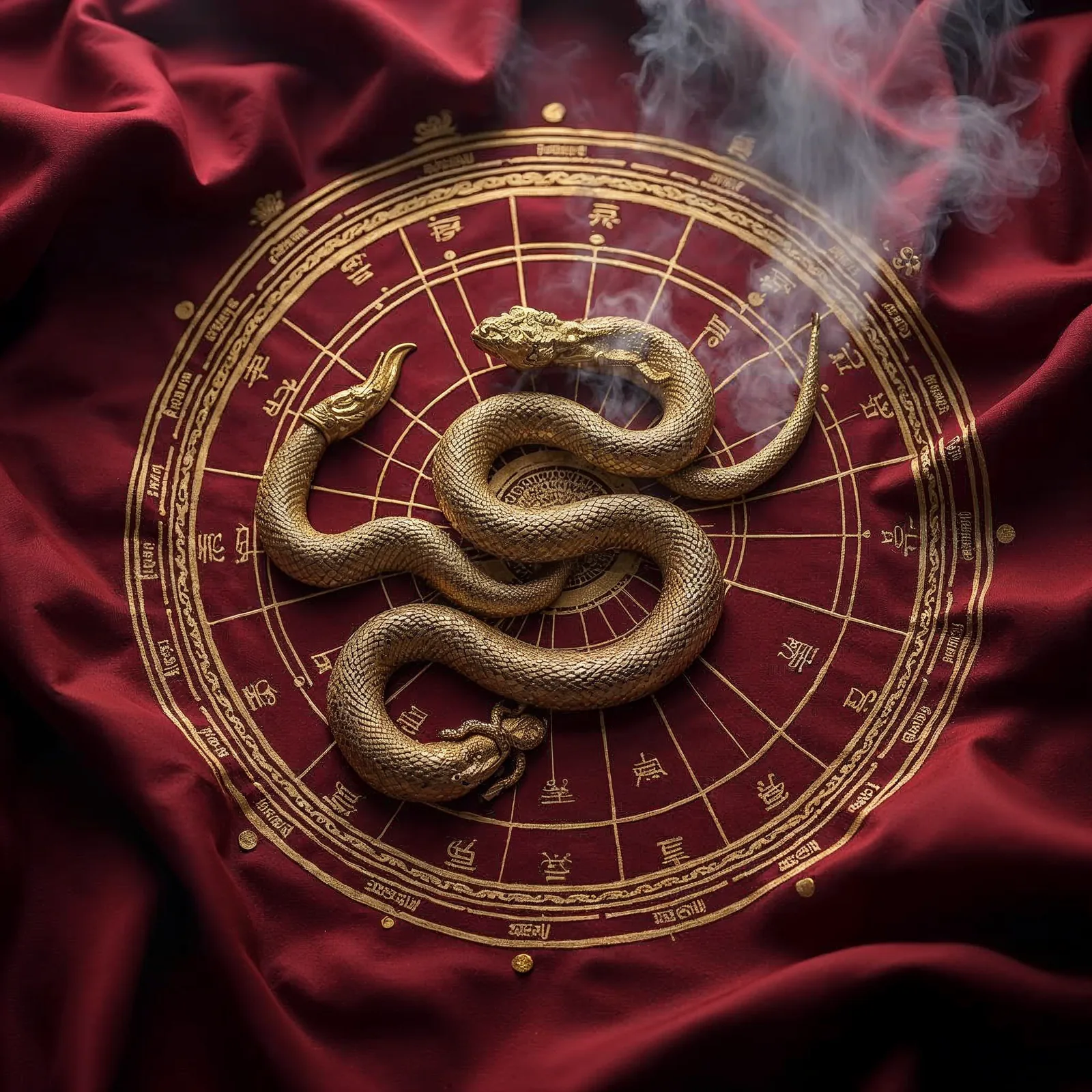
Kaal Sarp yoga occurs when every planet sits within the arc between Rahu and Ketu - the two lunar nodes swallowing the chart, so to speak. It is diagnosed far too casually: many charts show "partial" Kaal Sarp where a single planet escapes, which changes the interpretation entirely.
The twelve types
Depending on where Rahu sits - from the 1st house (Anant) to the 12th (Sheshnag) - the dosha colours different life areas: self, family, siblings, home, children, health, marriage, longevity, fortune, career, gains, expenses. Anant Kaal Sarp in the 1st house is very different from Sheshnag in the 12th.
What it does and doesn't mean
Classically, Kaal Sarp natives report early-life struggle that resolves with maturity - the chart's energy is "locked" until midlife. It is not a curse, and several famously successful people carry it. If your report shows it, the useful questions are which type, how tight the nodal grip is, and which dashas unlock it.
Types of Kaal Sarp - and what each actually does
The twelve types are named by which houses Rahu and Ketu occupy. Anant (Rahu 1st) presses identity and health; Kulik (2nd) hits family finances and speech; Vasuki (3rd) strains sibling ties and courage; Shankhpal (4th) disturbs home, mother and inner peace; Padma (5th) touches children and education; Mahapadma (6th) brings litigation and rivals; Takshak (7th) complicates marriage and partnerships; Karkotak (8th) stresses shared resources and longevity themes; Shankhachood (9th) weighs on fortune and father; Ghatak (10th) obstructs career; Vishdhar (11th) delays gains; Sheshnag (12th) drains through expenditure and foreign entanglements.
Severity varies enormously. A partial kaal sarp - where a planet escapes the Rahu-Ketu axis - is dramatically weaker than a full formation. The dosha is also judged against the rest of the chart: a strong lagna lord, benefic aspects and good dashas can carry a person through it almost unnoticed.
Remedies that the tradition actually prescribes
The classical response is Shiva and serpent worship: Rudrabhishek (especially at Trimbakeshwar or Ujjain), Mahamrityunjaya japa, and on Nag Panchami, milk offerings to serpent deities. Reciting the Kaal Sarp mantra and wearing a disciplined spiritual routine matter more than any single ritual. Trimbakeshwar's dedicated Kaal Sarp puja is the famous one - a sincere home abhishek with a qualified pandit carries the same intent if travel is not possible.
Common questions
Is Kaal Sarp a lifelong curse? No - its effects concentrate in Rahu/Ketu dashas and antardashas. Many carriers live ordinary lives outside those periods.
Can it be seen in a free chart? Any chart shows the axis placement; what a proper report adds is whether the formation is full or partial, its type, and its timing.
Do all astrologers accept it? It is a later-era dosha, not from Parashari classics - some traditional astrologers down-weight it. Either way, the axis placement is real and interpretable.